Introduction
Hockey is a sport that demands explosive power, rapid directional changes, and a unique skating stride that places significant stress on the hip and groin region. These demands often result in a predictable injury pattern affecting players across all levels, from youth leagues to professional teams. Groin strains represent approximately 10 to 15 percent of all hockey-related injuries and are among the most frustrating issues players face, mainly due to their tendency to become chronic and recurrent. The core problem often isn’t just muscle weakness but a combination of limited hip mobility and muscle imbalances that the skating motion exacerbates. Understanding this connection and proactively addressing it can dramatically reduce injury risk and enhance on-ice performance.
Why Hockey Players Get Groin Strains
The skating stride in hockey requires powerful hip adduction, the movement that brings your leg back toward your body’s midline after a push-off. Your adductor muscles, commonly known as the groin muscles, perform this action hundreds to thousands of times during practices and games. This repetitive demand places enormous stress on these muscles and their tendon attachments.
Several factors contribute to hockey players’ vulnerability to groin strains:
- The skating position keeps hips in a flexed and slightly externally rotated position for extended periods, leading to tightened hip flexors and limited hip extension.
- Explosive starts, stops, and directional changes require sudden maximum contractions of the adductors.
- Contact and collisions can force legs into extreme positions that exceed the normal range of motion.
- Equipment weight and restriction can alter movement patterns, increasing muscle fatigue.
The groin strain typically occurs when the adductor muscle or tendon is stretched beyond its capacity, often during a skating stride where the leg extends further than usual or during a rapid direction change.
The Hip Mobility Connection
Limited hip mobility is the single strongest predictor of groin injury risk among hockey players. When hips cannot move through their full range of motion, the body compensates by overworking other structures, leading to a breakdown often manifested as a groin strain.
Assessing Your Hip Mobility
Several simple tests can identify hip mobility limitations before they lead to injury:
- The hip flexor length test: Lie on your back at the edge of a table or bed, pull one knee to your chest while letting the other leg hang down. If the hanging leg doesn’t stay flat or the knee won’t straighten, there’s hip flexor tightness.
- For hip internal rotation, sit with your knee bent at 90 degrees and rotate your lower leg outward, internally rotating your hip. You should achieve at least 30 to 40 degrees of motion.
- The butterfly stretch assesses adductor flexibility by sitting with the soles of your feet together and gently pressing your knees toward the floor.
- The hip extension test can be performed standing by taking a large step backward into a lunge position.
Building Groin Strength and Resilience
While mobility is crucial, strength is equally important in preventing groin strains. The adductor muscles need sufficient strength to handle skating forces, adequate endurance to maintain strength throughout a game, and balance with opposing muscle groups like the hip abductors.
Effective Groin Strengthening Exercises
- Copenhagen adductor planks
- Lateral skater lunges
- Resistance band adduction exercises
- Ball squeezes
The key is progressive loading over time. Start with exercises you can control perfectly and gradually increase difficulty, resistance, or duration.
Dynamic Warm-Up for Groin Protection
A proper warm-up is essential for preparing the groin and hip complex for the explosive demands of hockey. Static stretching before activity is less effective and may actually increase injury risk. Instead, focus on dynamic movements that progressively increase range of motion and activate key muscle groups.
Managing Training Load During the Season
Groin strains often occur when accumulated fatigue exceeds the body’s recovery capacity. During intense parts of the season with multiple games per week, groin muscles may never fully recover before the next demand. This progressive fatigue reduces the force threshold needed to cause injury.
Treating Minor Groin Discomfort Before It Becomes Major
Many serious groin strains start as minor discomfort that players ignore or play through. Recognizing early warning signs and addressing them immediately can prevent progression to significant injury.
The Chronic Groin Strain Problem
Groin strains have a frustrating tendency to become chronic or recurrent. Studies show that up to 20 percent of groin strains don’t fully heal, and players return to play with persistent symptoms.
Off-Season Hip and Groin Preparation
The off-season is the ideal time for comprehensive hip and groin preparation to protect you throughout the coming season. This period allows time for addressing mobility limitations without competition demands, building strength systematically through progressive loading, and correcting movement patterns and imbalances.
Professional Assessment and Treatment
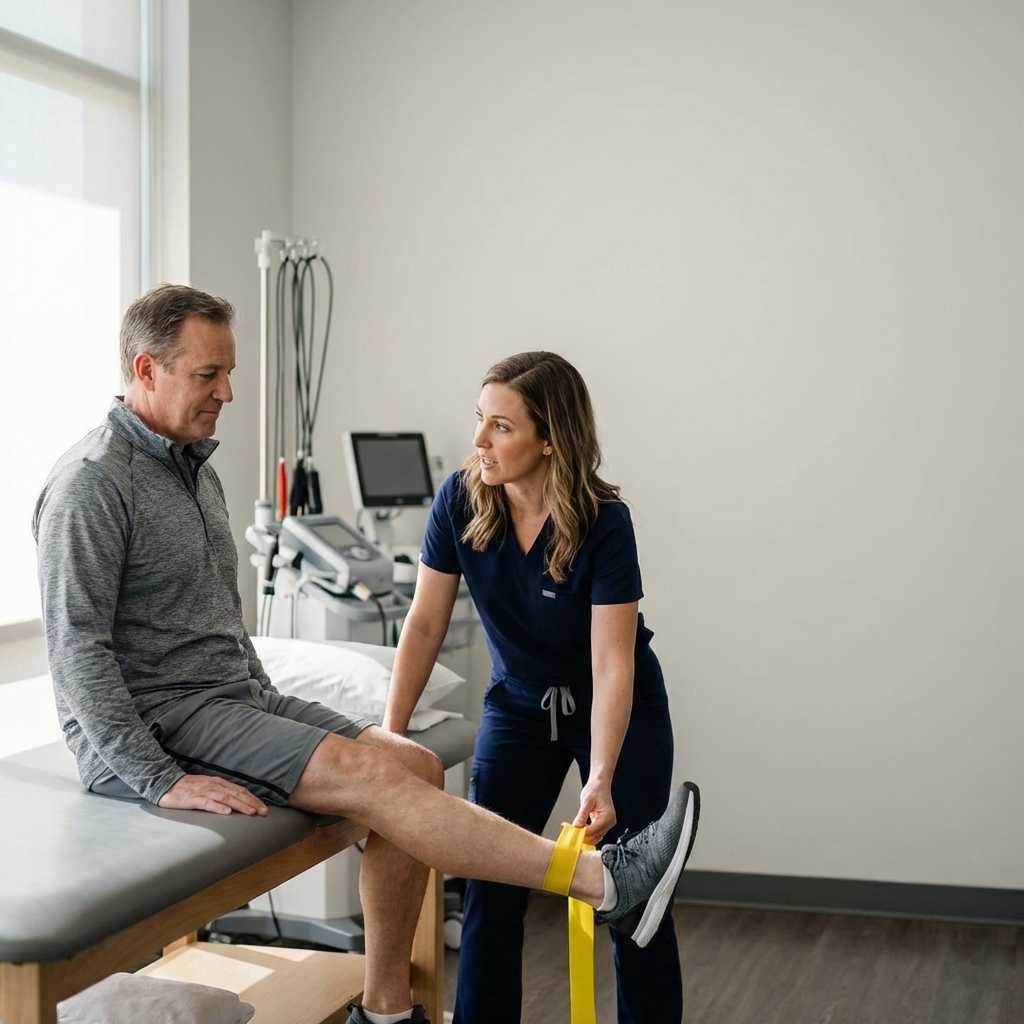
Hip mobility limitations and strength imbalances are difficult to assess and address on your own. Many players don’t recognize their restrictions until a physical therapist evaluates them and reveals significant deficits. Professional assessment provides objective measurement of your mobility and strength, identifies specific risk factors for your individual mechanics, and creates targeted interventions for your needs.
Don’t wait for a groin strain to sideline your season. Call us today at (720) 480-2866 to schedule your hockey injury prevention assessment. Our physical therapists will evaluate your hip mobility and groin strength, identify specific risk factors for injury, create a personalized prevention program for hockey demands, and help you stay on the ice performing at your best throughout the entire season!