Introduction: Basketball as a Physically Demanding Sport
Basketball is undeniably one of the most physically demanding sports, requiring players to engage in explosive jumping, rapid directional changes, and repetitive overhead movements, all while maintaining contact with other players. These dynamic actions lead to predictable injury patterns that often sideline athletes across all levels, from youth leagues to professional teams. Among the most common basketball-related injuries are ankle sprains, knee injuries, and shoulder problems. Research indicates that basketball players have some of the highest injury rates among all team sports. The encouraging news is that targeted prevention programs can significantly reduce these injuries by 50 percent or more when players commit to proper preparation and maintenance throughout the season.
Ankle Injuries: The Most Common Basketball Problem
Ankle sprains top the list as the single most common basketball injury, accounting for nearly 40 percent of all basketball-related injuries. The sport’s constant jumping, landing, cutting, and contact create endless opportunities for ankle trauma. Players may land on another player’s foot, roll their ankle during a cut, or land awkwardly from a rebound or shot.
The lateral ankle sprain, where the ankle rolls outward, is the most typical injury. This motion stretches or tears the ligaments on the outside of the ankle. Many players attempt to dismiss ankle sprains as minor injuries; however, improper healing and rehabilitation can lead to chronic ankle instability, significantly increasing the risk of future sprains. Athletes who have experienced one ankle sprain are up to five times more likely to suffer another.
Effective Prevention Strategies
Prevention begins with ankle strengthening and proprioception training. The ankle relies heavily on small stabilizing muscles and rapid reflexive responses to maintain stability during dynamic movements. Exercises that challenge balance on unstable surfaces, single-leg exercises that build strength in lateral directions, and plyometric training that prepares ankles for landing forces all help in reducing injury risk.
Many players benefit from ankle bracing or taping, especially those with previous sprains. Modern ankle braces are designed to allow normal movement while providing mechanical support during the extreme positions that lead to sprains. The evidence strongly supports bracing for injury prevention, particularly in players with a history of ankle problems.
Knee Injuries: From Minor to Season-Ending
Basketball players face multiple types of knee injuries, ranging from relatively minor patellar tendinitis to devastating ACL tears. The knee bears enormous forces during jumping and landing, with impact forces reaching three to six times body weight during a single landing. When combined with rapid cutting movements, sudden deceleration, and contact from other players, the injury potential becomes clear.
Common Knee Injuries
Patellar tendinitis, often called jumper’s knee, causes pain at the front of the knee where the patellar tendon attaches. This overuse injury develops from repetitive jumping and affects up to 30 percent of basketball players. While not typically serious, it causes significant pain that limits performance and can become chronic without proper management.
ACL tears represent the most serious knee injury basketball players face. These devastating injuries require surgery and 9 to 12 months of rehabilitation, often ending a player’s season. Female basketball players face particularly high ACL injury risk, with rates two to eight times higher than male players due to anatomical, hormonal, and neuromuscular factors.
Preventing Knee Injuries
ACL injury prevention programs focus on neuromuscular training that teaches proper landing mechanics and movement patterns. Key elements include landing with knees bent and over toes rather than collapsed inward, engaging hip and glute muscles to control knee position, building hamstring strength to protect the ACL from excessive stress, and developing the body control to maintain proper mechanics even when fatigued.
Research shows that structured prevention programs incorporating these elements can reduce ACL injuries by 50 to 70 percent. However, these programs only work when performed consistently, ideally 2 to 3 times weekly throughout the entire season, not just during the pre-season.
Shoulder Injuries: The Overhead Athlete’s Challenge
While less common than ankle and knee injuries, shoulder problems significantly impact basketball players, particularly those who shoot frequently or play aggressive defense. The repetitive overhead motion of shooting, combined with contact during rebounding and defense, creates multiple injury mechanisms.
Common Shoulder Issues
Rotator cuff tendinitis and impingement are the most common shoulder issues. The rotator cuff, a group of four muscles that stabilize the shoulder joint, becomes inflamed from repetitive overhead shooting motions. Players experience pain with shooting, passing, and reaching overhead. Left untreated, this can progress to more serious rotator cuff tears.
Shoulder instability, where the ball of the shoulder joint moves excessively or even partially dislocates, affects players who experience direct contact or fall on an outstretched arm. Once a shoulder has been injured, the supporting structures remain stretched, creating chronic instability that’s vulnerable to repeated injury.
Prevention and Care
Prevention requires balanced shoulder strengthening, emphasizing the rotator cuff muscles and scapular stabilizers, proper shooting mechanics that don’t place excessive stress on shoulder structures, and adequate recovery time between high-volume shooting sessions. Players should recognize early warning signs like shoulder pain with shooting or stiffness the day after games and address them before they progress to more serious injuries.
The Role of Proper Warm-Up and Cool-Down
Many basketball injuries occur because players step onto the court without adequate physical preparation. A proper warm-up increases blood flow to muscles, improves joint mobility and range of motion, activates stabilizing muscles, and mentally prepares players for the demands ahead.
An effective basketball warm-up includes 5 to 10 minutes of light cardiovascular activity to raise body temperature, dynamic stretching that moves joints through their full range of motion, sport-specific movements like defensive slides and layup lines, and activation exercises for key stabilizing muscles around ankles, knees, and shoulders.
The cool-down is equally important but more frequently neglected. After games and practices, spend 10 minutes on light activity to gradually lower heart rate, static stretching for major muscle groups, and foam rolling or self-massage for recovery. This routine aids recovery and prepares your body for the next session.
Managing Training Load and Recovery
The basketball season is long, often spanning several months with multiple games per week plus practices. This accumulated stress without adequate recovery is a major injury risk factor. Players who are fatigued have slower reaction times, poorer movement control, and muscles that can’t adequately protect joints.
Smart load management includes having at least one complete rest day per week, limiting high-intensity training close to games, monitoring total practice and game minutes, particularly for young players, and listening to your body when unusual soreness or pain develops. The most motivated players often need reminding that rest is productive training, not laziness. Your body adapts and strengthens during recovery periods, not during the stress of activity itself.
Sleep is perhaps the most underrated aspect of injury prevention. Athletes who sleep less than 8 hours per night have significantly higher injury rates than those who get adequate rest. During sleep, your body repairs tissues, consolidates motor learning, and restores energy systems. Prioritizing sleep isn’t optional for serious injury prevention.
Strength Training Beyond the Court
While basketball practice develops basketball skills, it doesn’t systematically build the strength and stability that protects against injury. A well-designed strength program complements court work by targeting areas that basketball doesn’t adequately stress, building balanced strength to prevent overuse injuries, improving power and explosiveness, and correcting muscle imbalances.
Focus on compound lower body exercises like squats and lunges for leg strength, single-leg exercises for balance and stability, posterior chain work including hamstrings and glutes, core strengthening for trunk stability, and upper body pulling exercises to balance the pushing motions of shooting and passing.
Strength training doesn’t need to be excessive or time-consuming. Two to three sessions per week of 30 to 45 minutes provide substantial injury protection and performance benefits. The key is consistency throughout the season, not just pre-season preparation.
Recognizing When to Seek Help
Many basketball injuries start small but progress when players continue playing through warning signs. Pain that persists beyond normal post-game soreness, joint swelling that doesn’t resolve within a day, decreased performance or range of motion, altered movement patterns or limping, and any sharp or sudden pain during activity all warrant professional evaluation.
Addressing problems early, when they’re minor and responsive to conservative treatment, prevents them from becoming season-ending injuries. The toughness culture in basketball sometimes discourages players from reporting pain, but playing through injury often causes more damage and results in longer time away from the sport.
Professional Sports Physical Therapy
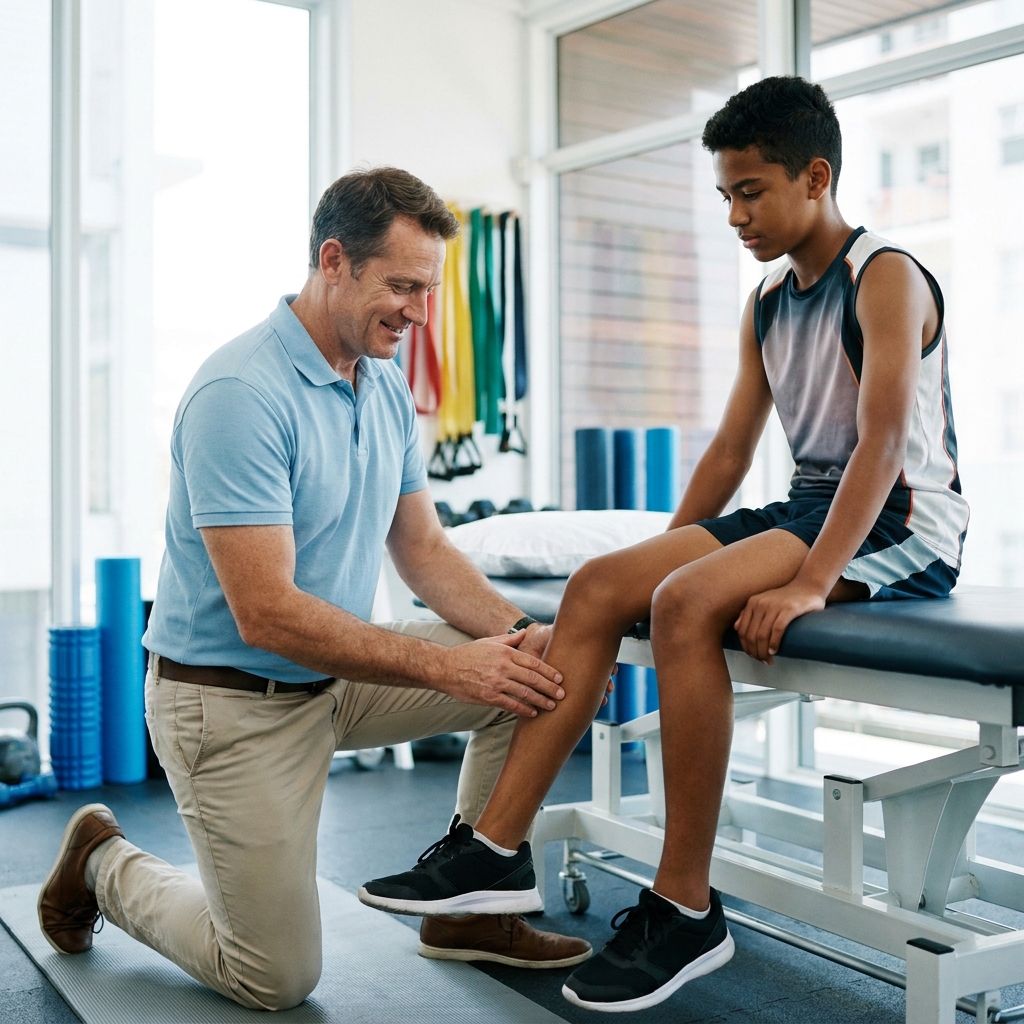
Basketball players at all levels benefit from working with physical therapists who understand the sport’s specific demands and injury patterns. Whether you’re preparing for the season, managing a current injury, or recovering from time off, specialized care optimizes your performance and longevity in the sport.
The sports physical therapy specialists at Fick Physical Therapy And Sports Performance in Highlands Ranch, CO work extensively with basketball players to prevent and treat common injuries. We provide comprehensive movement screenings to identify injury risks, create sport-specific injury prevention programs, treat acute and overuse injuries with proven techniques, and design return-to-play protocols after injury.
“We Empower You To Recover From Injury As Quickly And Safely As Possible In Order To Optimize Your Function And Maximize Your Athletic Potential.”
Don’t let preventable injuries limit your basketball season. Call us today at (720) 480-2866 to schedule your basketball injury prevention assessment. Our physical therapists will evaluate your movement quality and injury risk factors, identify areas of weakness or instability, create a personalized prevention program for your position and playing style, and help you stay healthy and performing at your best throughout the entire season!
Ask About Availability & Cost
Free Discovery Session