Introduction
Have you ever rolled out a yoga mat and found yourself feeling taller, more relaxed, or simply more attuned to your body afterwards? This isn’t just a fleeting sensation—yoga is particularly advantageous for your spinal health. By integrating mindful movement, breath awareness, and controlled range of motion, yoga cultivates both strength and flexibility in the body.
“Yoga has become a popular and accessible way to support your spine health,” said Mansour Mathkour, MD, a spine surgeon with Banner – University Medicine. He elaborated on how yoga benefits your spine and offered guidance for safe practice.
What Yoga Does for Your Spine
1. Enhances Your Range of Motion
Your spine is a dynamic structure that enables various motions, such as bending, arching, and twisting. Yoga encourages you to perform these movements mindfully and safely, promoting flexibility and reducing stiffness, particularly if you’ve been sedentary for prolonged periods.
“Yoga poses encourage you to move beyond your regular day-to-day flexibility,” Dr. Mathkour noted.
Yoga engages multiple muscle groups, particularly in the lower back, often alleviating pain caused by tight hamstrings and hips. Enhanced flexibility in these areas can make daily activities like bending, walking, or rising from a chair easier and more comfortable.
2. Fosters Body Awareness through Breathwork
Yoga seamlessly connects breath to movement. “Controlled breathing can calm your nervous system, reduce muscle tension, and heighten body awareness. These benefits are especially valuable if you experience stress-induced muscle pain or are recuperating from injury or surgery,” Dr. Mathkour explained.
As you flow through yoga poses, your awareness of how your spine and its supporting muscles function increases. This improved body awareness helps identify and correct habits that may place unnecessary strain on your back.
3. Strengthens and Flexes Your Body
A healthy spine requires both strength and flexibility. Through yoga, you build the muscles that stabilize and support your spine. “During your practice, you stretch certain muscles while actively engaging and strengthening others,” Dr. Mathkour stated.
Initially, holding certain yoga poses might be challenging. Starting with simpler poses and gradually building strength is advisable. “As your core strength improves, you’ll likely notice enhanced spinal support, endurance, and movement confidence,” Dr. Mathkour added.
4. Supports Your Posture and Upper Body
Poor posture often indicates a weak core. Strengthening your core facilitates maintaining a good posture, reducing spine strain, and promoting overall alignment. Yoga poses like downward dog and plank variations fortify shoulder, back, and abdominal muscles while minimizing joint stress.
5. Enhances Your Balance
Balance arises from a synergy of strength, flexibility, and awareness. Yoga deepens your body connection and teaches your muscles to maintain stability in diverse positions. “Improved balance can lower your fall risk, boost your activity confidence, and support long-term mobility, enabling safer and more comfortable movement,” Dr. Mathkour said.
6. Promotes Mindful Movement
Yoga encourages moving with intention. When lifting, twisting, or bending, you learn to do so in ways that uphold proper spinal alignment, safeguard your spine, and minimize strain.
Yoga Poses that are Easy on the Spine
According to Dr. Mathkour, “For many, simple, gentle movements are often ideal for the spine. Yoga poses that emphasize slow, controlled motion and maintain neutral alignment aid in reducing stiffness and stabilizing your spine.”
- Cat-cow: On hands and knees, inhale to arch your back while lifting your head, then exhale to round your spine and lower your head in a smooth, controlled motion. This pose gently warms the spine and promotes nervous system relaxation.
- Child’s pose: Sit on your heels, leaning forward toward the mat. Stretch your arms forward or rest them alongside your body for comfort. This pose gently alleviates lower back tension.
- Downward-facing dog: From hands and knees, raise your hips up and back, hands and feet on the floor, body forming an inverted V. Bend knees slightly if hamstrings are tight for comfort and alignment. This pose uses gravity and body weight to create spinal space and encourage overall mobility.
- Gentle seated twists: Sit comfortably, twisting slowly and with control to each side. Twists mobilize the spine gently and maintain flexibility.
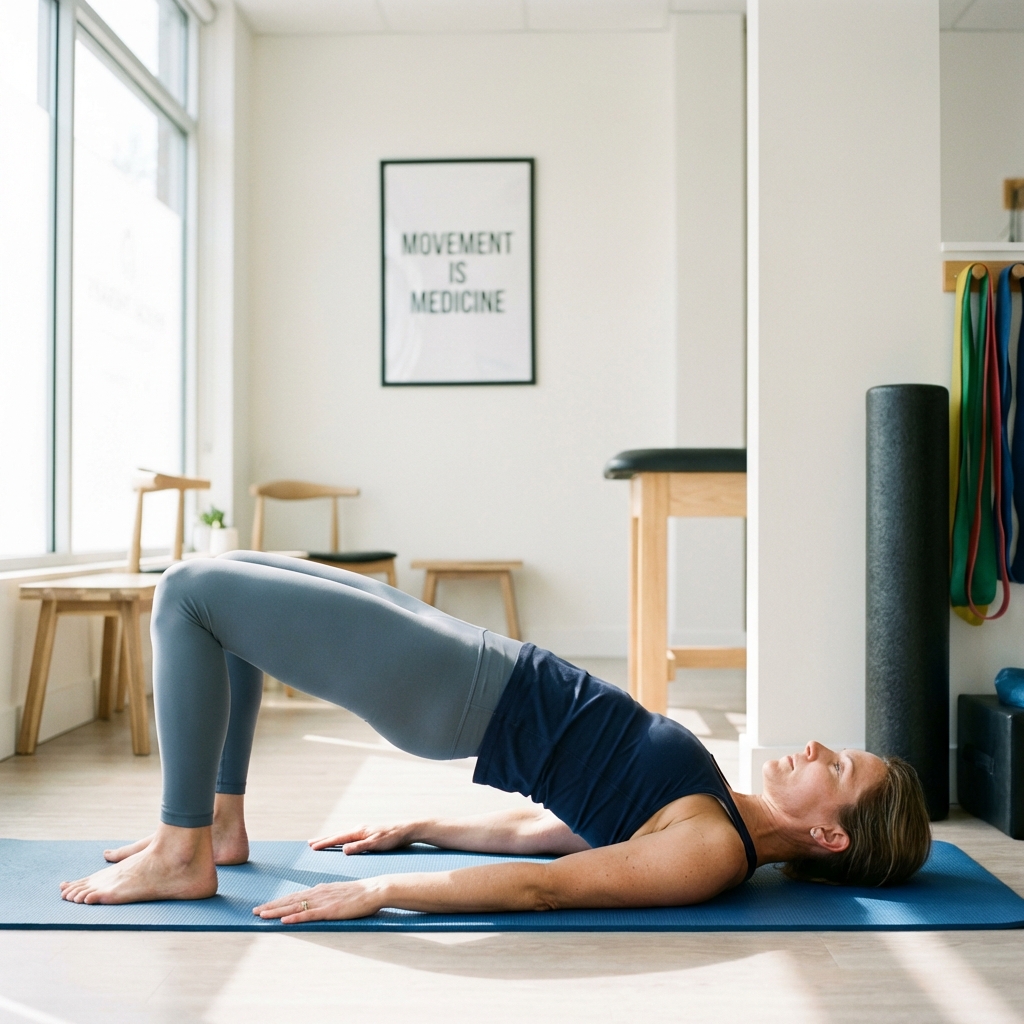
- Supported bridge pose: Lie on your back, knees bent, with a block or pillow under hips for support. This pose strengthens glutes while minimizing spinal strain.
- Pelvic tilts: On your back with bent knees, tilt pelvis to gently press lower back into the mat, engaging your core. This exercise activates deep core muscles to support the spine and enhance spinal control.
- Knees to chest: Lie on your back with bent knees. Draw one knee into your chest, then return it in a controlled manner. Repeat on the other side. This stretch gently alleviates lower back tension and encourages relaxation.
- Sphinx or cobra: Lie on your belly, lifting your chest slowly and gently with forearm (sphinx) or palm (cobra) support, keeping hips relaxed on the mat. These poses extend the spine safely without excessive compression.
Tips for Safe Yoga Practice
“While yoga offers many benefits, your practice approach is crucial,” Dr. Mathkour advised. Yoga is notably beneficial for:
- Stiffness from prolonged sitting
- Mild neck or back discomfort
- Stress-induced muscle tension
- Maintaining mobility with aging
To optimize your yoga practice and protect your spine:
- Start slowly: Shorter sessions, slower-paced classes, or beginner routines are excellent starting points.
- Listen to your body: A mild stretch is beneficial, but sharp or worsening pain is not.
- Modify as needed: Utilize props like blocks, straps, or blankets for proper alignment and strain reduction.
- Breathe deeply and slowly: Breathwork supports movement and alleviates tension.
- Warm up and cool down: Gentle pre-and post-practice movements prevent discomfort.
- Consider professional guidance: A trained yoga instructor can ensure safe technique and alignment.
When to Consult a Health Care Provider
“Yoga supports comfort and mobility but doesn’t replace medical care for spine conditions or neurological symptoms,” Dr. Mathkour emphasized.
Yoga is generally safe, but consult a health care provider if you have:
- Pain that doesn’t improve or worsens
- Numbness, weakness, tingling, or sharp pain in your limbs
- A history of spine surgery or osteoporosis
- Recent back or neck injuries
- New or worsening symptoms
Your health care provider can help tailor your yoga practice to your specific needs safely.
Conclusion
Incorporating yoga into your exercise regime is an excellent way to bolster your spine health and overall well-being. By practicing yoga mindfully and safely, it can become a valuable and enduring part of your routine. Whether new to yoga or a seasoned practitioner, focusing on gentle, controlled movements and listening to your body will help your spine remain healthy and feel its best.
For more personalized guidance on integrating yoga into your spine health routine, consider reaching out to a Banner Health provider.
Explore More
- Pilates vs. Yoga: Which One Is Right for You?
- Chair Yoga: Gentle Exercises for Seniors with Limited Mobility
- How Flexibility and Mobility Help You Stay Strong and Healthy for Life