Introduction: The World Is Coming to America
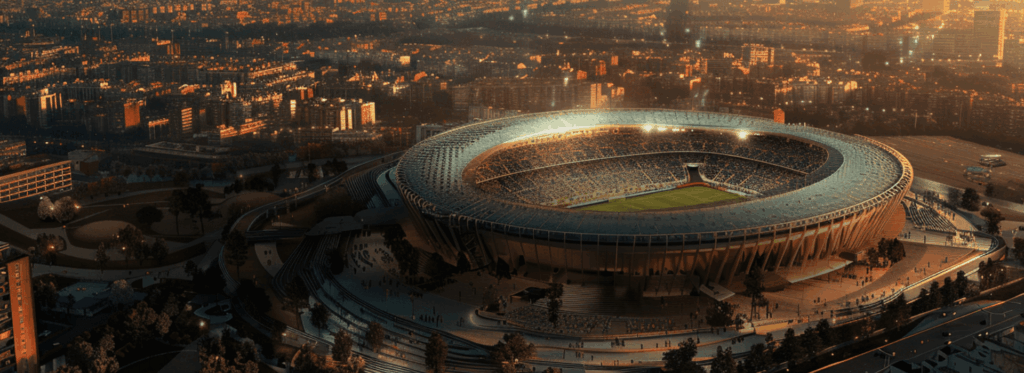
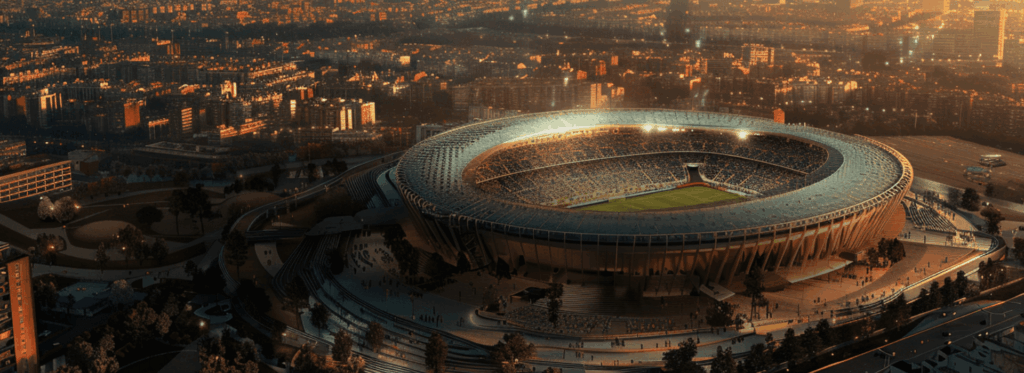
Imagine the excitement and energy when, in just a few short months, between 6 and 6.5 million people from across the globe converge on American soil for the 2026 FIFA World Cup. This is more than just a sporting event; it’s a significant international gathering, a security challenge enveloped in a grand celebration.
The Immense Scale of the 2026 FIFA World Cup
Consider this daunting scenario: Hosting 104 Super Bowls across 11 cities within a few weeks. Unlike a single championship game where security resources are centralized, this event demands extensive coordination, as activities occur simultaneously at multiple locations.
The Global Context Has Changed
Let’s acknowledge the reality… this isn’t 2014 Brazil or even 2022 Qatar. The world has become more dangerous, unpredictable, and considerably more volatile.
Iran has already expressed discomfort about playing matches on U.S. soil. Picture that—a World Cup team, composed of athletes who have trained their entire lives for this moment, concerned about their safety simply by being here. This speaks volumes.
Security experts are candid in their assessments, warning of threats ranging from terrorism and cyberattacks to civil unrest. This isn’t an abstract threat; it’s a real, active concern with planning underway:
- Propaganda from extremists is flooding online platforms
- Public transportation systems and crowded venues are discussed as potential targets
- Fan festivals, those joyous, open-air celebrations, are particularly vulnerable
This isn’t fearmongering but a stark reality.
The Threat Inside Our Borders
Complicating matters further, the threat isn’t solely external.
There has been a disturbing rise in domestic, lone-actor incidents. Events like the World Cup are what security professionals grimly describe as “target-rich environments.” Dense crowds. Predictable schedules. Global TV coverage. A perfect storm.
The statistics are daunting:
- 48 teams
- 104 matches
- Millions of global viewers
- Extensive public fan zones with minimal barriers
- Security operations stretched across multiple cities
This last point is crucial. This event isn’t a single fortress to secure but a dozen cities, each with unique challenges, all requiring Super Bowl-level protection.
The Complex Equation of Security
Here’s an issue often sidestepped: You can’t simply hire your way out of this situation.
Even with massive federal funding, advanced counter-drone systems, and all the cutting-edge technology at our disposal, there aren’t enough trained security personnel to monitor every corner of every venue in every city.
Time is tight. Resources are limited. The traditional playbook doesn’t scale.
Augment, Don’t Replace
What we must not do is assume that AI can replace human judgment and experience. Such thinking is dangerous.
However, AI possesses revolutionary potential.
At PerVista, we’re pioneering “Physical AI” systems that understand real-world events as they unfold—not in some digital realm or by analyzing data post-event, but in real time.
The beauty of this approach is its compatibility with existing infrastructure:
- Utilizes existing cameras
- Integrates with current video management systems
- Requires no massive infrastructure overhaul
- Demands no extended installation period
When a threat, such as a weapon being drawn, is detected, alerts are delivered in seconds.
Not minutes. Seconds. In an event like the World Cup, this difference is crucial. It can mean the difference between life and death.
From Watching to Knowing
Consider the burden on security operators today. They face walls of video feeds, tasked with identifying anomalies amidst countless normal moments. It’s cognitive overload by design.
AI revolutionizes this equation:
- Identifies potential threats sooner
- Enables operators to make faster, more informed decisions
- Extends their oversight across a vast security landscape otherwise impossible to cover
One security officer with AI assistance can effectively monitor what would otherwise require ten unaided personnel. This isn’t replacement—it’s multiplication.
The Shift We Need to Make
Historically, security has been reactive. An incident occurs, and response efforts ensue.
The World Cup demands a proactive approach, termed “interceptive security,” which involves identifying threats before they escalate into tragedies.
This approach shifts focus from:
- Observing to understanding
- Reacting to anticipating
- Isolated surveillance to integrated intelligence
AI is the catalyst for this transformation, bridging the gap between our current state and where we critically need to be.
What’s Really at Stake
The 2026 World Cup transcends soccer. It’s a test of America’s ability to safeguard the global stage during a period of unprecedented instability.
Can we succeed? Absolutely. We possess talented individuals, remarkable technology, and decades of experience.
However, success also requires collaboration: Government agencies, private sector innovators, and frontline security personnel must work in concert. No jurisdictional battles. No bureaucratic delays. Just focused, unified action.
The truth is: Success isn’t merely hosting the games. Success is measured by the ability of millions to gather, celebrate, witness history, and return home safely. This is the benchmark.
The Clock Is Ticking
In less than a year, the global community will deliver its verdict on America. Evaluation won’t just hinge on match outcomes, but on our ability to ensure the safety of spectators, teams, and the public.
Security won’t be a mere backdrop in 2026. It will be the defining story of the tournament, for better or worse.
The question remains: Are we ready?
The time for preparation is not when the opening match begins. It is now.
Vennard Wright is the CEO of PerVista AI, a company dedicated to real-time threat detection using artificial intelligence in physical spaces.